
Select language
Select language
Cart
Why Iron, Protein, Vitamin B12 Deficiencies Develops. Atrophic Gastritis. Reflux.
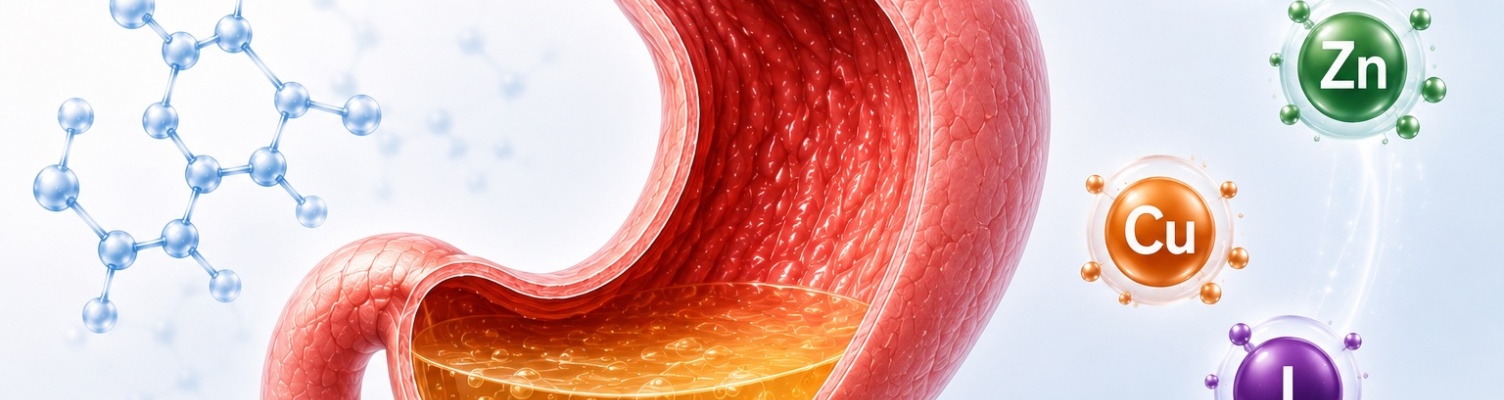
Why It Is Important to Treat the Cause of Low Stomach Acid, Not Only the Consequences
Most people believe that the main function of the stomach is to digest food. In reality, its role is much broader. The stomach is where the process begins that determines the further absorption of proteins, vitamins and minerals essential for the functioning of all organs and systems in the body.
Hydrochloric acid plays a key role in this process.
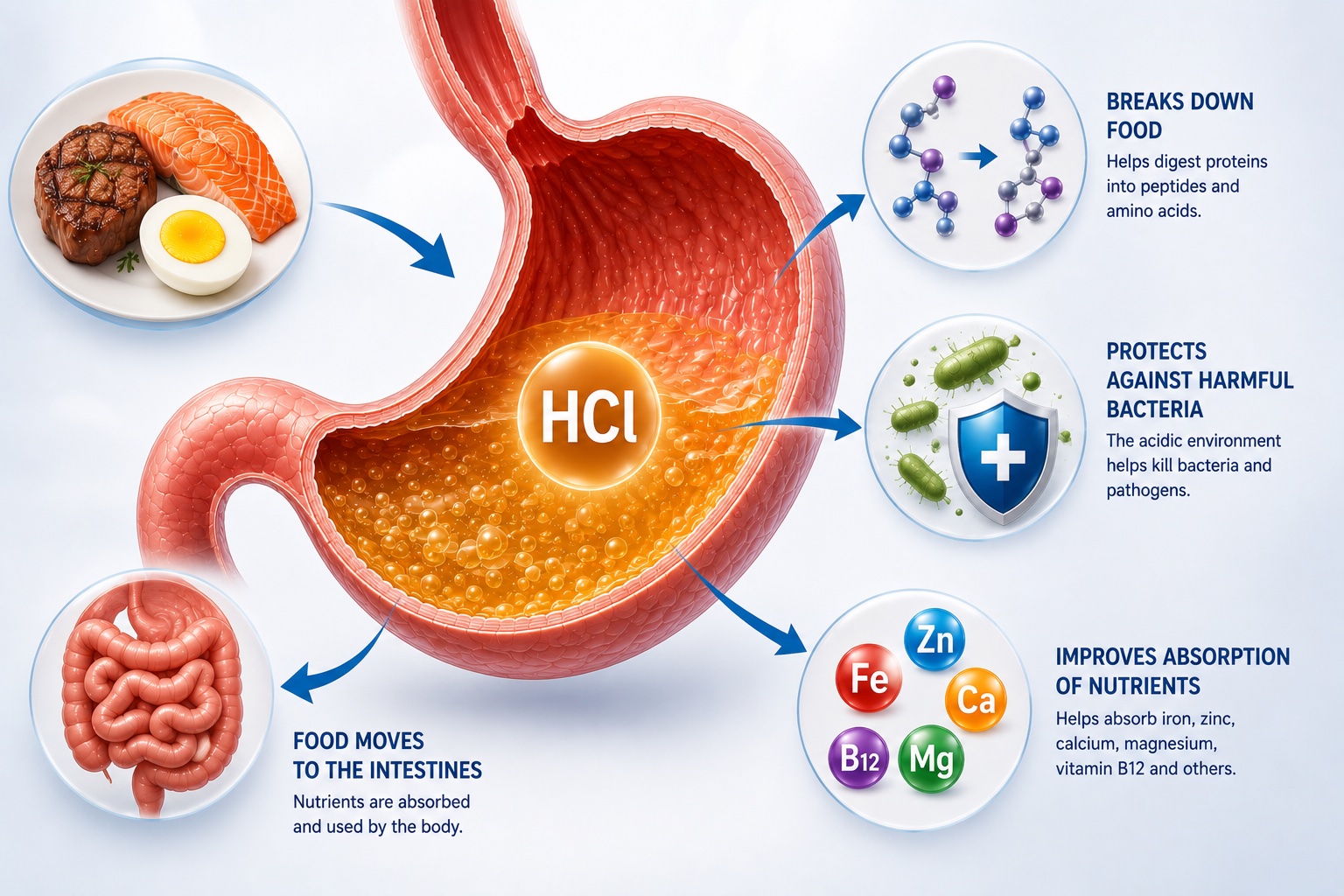
It activates digestive enzymes, helps break down protein-rich foods, prepares them for further digestion in the intestines and creates the conditions necessary for the absorption of many vital nutrients. When stomach acid levels decrease, the body may have difficulty absorbing iron, vitamin B12, zinc, copper, iodine, chromium, sulfur-containing amino acids and protein.

|
We asked physician and clinical biochemist Svetlana Malevich to share her practical experience and modern understanding of digestive system function. For more than 20 years, Svetlana Malevich has worked at the E-asis Clinic in Greece, where she evaluates mineral metabolism using hair spectral analysis for trace elements and heavy metals. She develops personalised metabolic correction programmes that may include dietary adjustments, replenishment of vitamin and mineral deficiencies, and the use of peptide bioregulators based on diagnostic results and a comprehensive assessment of the patient’s condition. |
Over the years of clinical practice, Svetlana Malevich has observed a consistent pattern: in many patients with chronic deficiencies of iron, vitamin B12, zinc, copper, iodine, chromium and protein, the underlying cause is not insufficient intake of these nutrients, but reduced stomach acid production and impaired functional condition of the gastric mucosa.

|
Expert commentary by Svetlana Malevich: «Over the years of my practice, I have become convinced that treating deficiencies alone is often not enough. Many patients come to me after several courses of iron, vitamin B12 or other supplements. Their test results improve for a while, but then the problem returns. In these cases, I always try to identify the underlying cause. Very often, it is associated with low stomach acid, when the body cannot fully absorb the nutrients it needs.» |
Why Low Stomach Acid Can Lead to Deficiencies of Protein, Vitamins and Minerals
When insufficient hydrochloric acid is produced, the digestion of protein foods becomes less effective, nutrient absorption is impaired and metabolic processes may be disrupted.
In many cases, the problem is not a lack of nutrients in the diet, but the fact that the stomach is no longer able to create the conditions required for their proper absorption. As a result, some people may take iron supplements, vitamin B12 or other vitamin and mineral complexes for years, yet their laboratory values continue to decline and symptoms return.
Signs that may indicate the need to assess stomach function include:
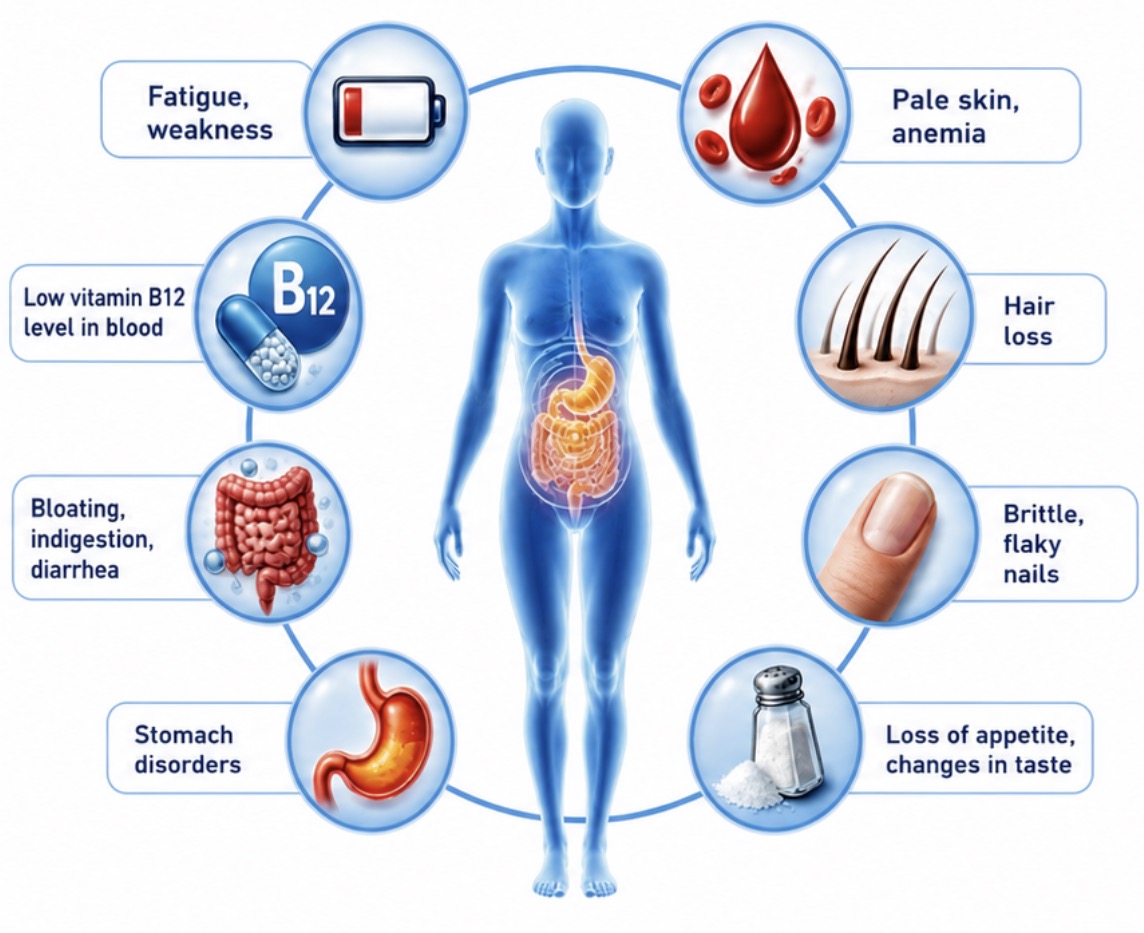
- iron-deficiency anaemia that is difficult to correct;
- reduced vitamin B12 levels;
- low protein levels;
- zinc, copper, iodine or chromium deficiency;
- hair loss and thinning;
- brittle nails;
- chronic fatigue;
- prolonged digestion of meat and other protein foods;
- heaviness after meals;
- abdominal bloating and increased gas production;
- rosacea;
- white spots on the nails;
- chronic giardiasis;
- impaired bile secretion;
- cravings for acidic and salty foods or a habit of adding extra salt to meals.
Each of these symptoms alone does not confirm low stomach acid. However, a combination of several signs may indicate the need for a more detailed assessment of stomach function and its acid-producing capacity.
|
|
Expert commentary by Svetlana Malevich: «When I see a simultaneous decrease in iron, zinc, copper, iodine, chromium and sulfur levels in hair analysis, this becomes a reason for me to pay closer attention to stomach function. I consider sulfur deficiency particularly significant because sulfur is part of sulfur-containing amino acids. This combination may indicate impaired digestion of protein foods, which is often associated with reduced stomach acid production. Of course, this is not a diagnosis, but rather a reason to recommend gastroscopy or other investigations prescribed by a gastroenterologist.» |
According to Svetlana Malevich’s observations, the combination of deficiencies in iron, sulfur, zinc, copper, iodine and chromium is one of the most common reasons to suspect impaired gastric secretory function and recommend a more detailed examination.
Atrophic Gastritis is a Common Cause of Low Stomach Acid
One of the most common causes of reduced stomach acid production is atrophic gastritis. It is a chronic condition in which the stomach lining gradually becomes thinner and the number of cells responsible for producing hydrochloric acid and digestive enzymes decreases. As a result, the stomach can no longer fully digest food, break down and absorb proteins, vitamins and minerals. Its natural protective function is also reduced.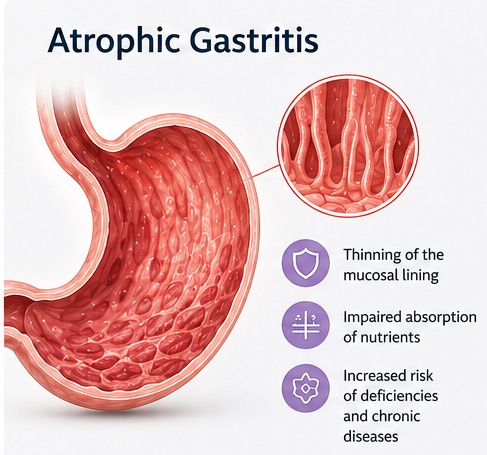
The danger of atrophic gastritis is that, in its early stages, the disease may cause few or no noticeable symptoms. Many patients experience no significant pain or typical digestive complaints for years, meaning changes in the stomach lining can remain unnoticed for a long time. As the atrophic process progresses, patients may develop chronic fatigue, iron-deficiency anaemia, vitamin B12 deficiency, zinc, copper, iodine and other micronutrient deficiencies, as well as deterioration in the condition of the skin, hair and nails. The risk of disturbances in the microbial balance of the gastrointestinal tract may also increase.
This is why atrophic gastritis should be viewed not only as a stomach disorder, but also as a condition that may affect the functioning of the entire body.
|
|
Expert commentary by Svetlana Malevich: «Many patients come to me not because of stomach complaints, but because of hair loss, chronic fatigue, low ferritin levels, vitamin B12 deficiency or low protein levels. When we begin looking for the underlying cause, we often discover that the problem is related to reduced stomach acid production and changes in the gastric mucosa. This is why I always try to assess the body as a whole rather than treating individual symptoms separately.» |
LowacidTIDE PLUS as Part of a Comprehensive Programme to Support Stomach Acid Restoration
Restoring the gastric mucosa requires a comprehensive approach aimed at supporting the recovery of stomach cells and maintaining normal secretory function.
LowacidTIDE PLUS is a multi-component peptide bioregulator included in comprehensive support programmes for patients with reduced stomach acid production and atrophic gastritis.
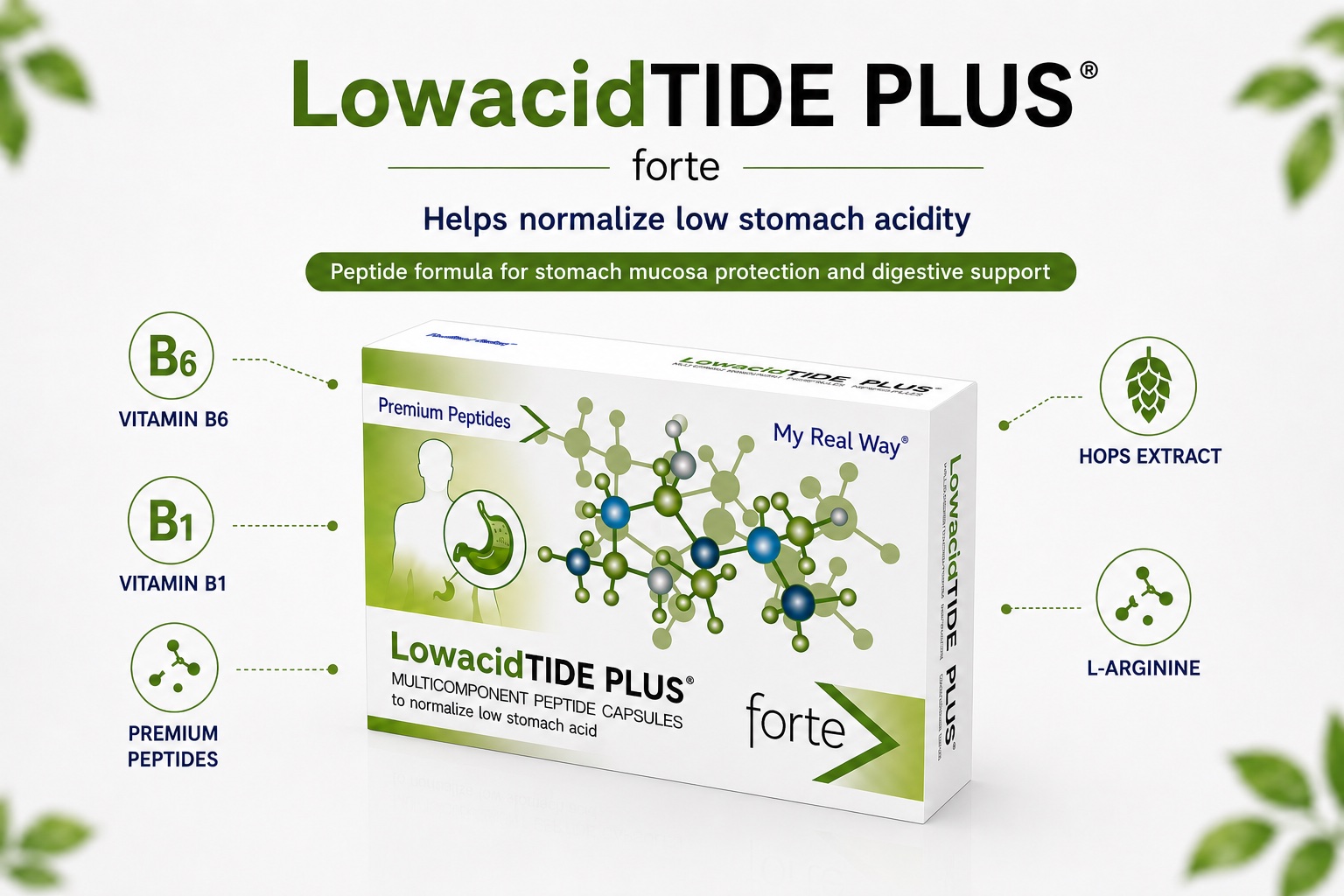
Active Ingredients of LowacidTIDE PLUS:
- NS peptide premix - natural peptides of animal origin support the functional condition of gastric mucosal cells.
- Leucine, isoleucine and valine - essential amino acids required for protein synthesis and tissue repair processes.
- L-arginine helps maintain normal microcirculation and tissue nutrition.
- Vitamin B6 is involved in protein metabolism and the function of digestive enzyme systems.
- Thiamine (vitamin B1) supports energy metabolism and normal nervous system function involved in the regulation of gastrointestinal activity.
- Extract of common hop flowers (lat. Humulus lupulus) contains naturally occurring biologically active compounds traditionally used to support digestive system function.
|
|
Expert commentary by Svetlana Malevich: «I consider LowacidTIDE PLUS as part of a comprehensive recovery programme. The best results are achieved when several approaches are combined: nutritional correction, replenishment of identified deficiencies and support for restoration of the functional condition of the gastric mucosa.» |
Clinical Case: Results of a Comprehensive Recovery Programme
One of Svetlana Malevich’s patients was under the supervision of a gastroenterologist due to atrophic gastritis with significant changes in the gastric mucosa.
Gastroscopy revealed signs of gastric atrophy and a chronic inflammatory process. Due to the increased risk of disease progression, the patient was advised to undergo follow-up gastroscopy every six months.
After a comprehensive assessment, an individual recovery programme was developed. It included dietary adjustments, correction of identified deficiencies and the use of LowacidTIDE PLUS as part of a comprehensive therapeutic approach. The results of the follow-up gastroscopy demonstrated positive changes: inflammatory alterations were significantly reduced, the condition of the gastric mucosa improved, and signs of tissue recovery were observed.
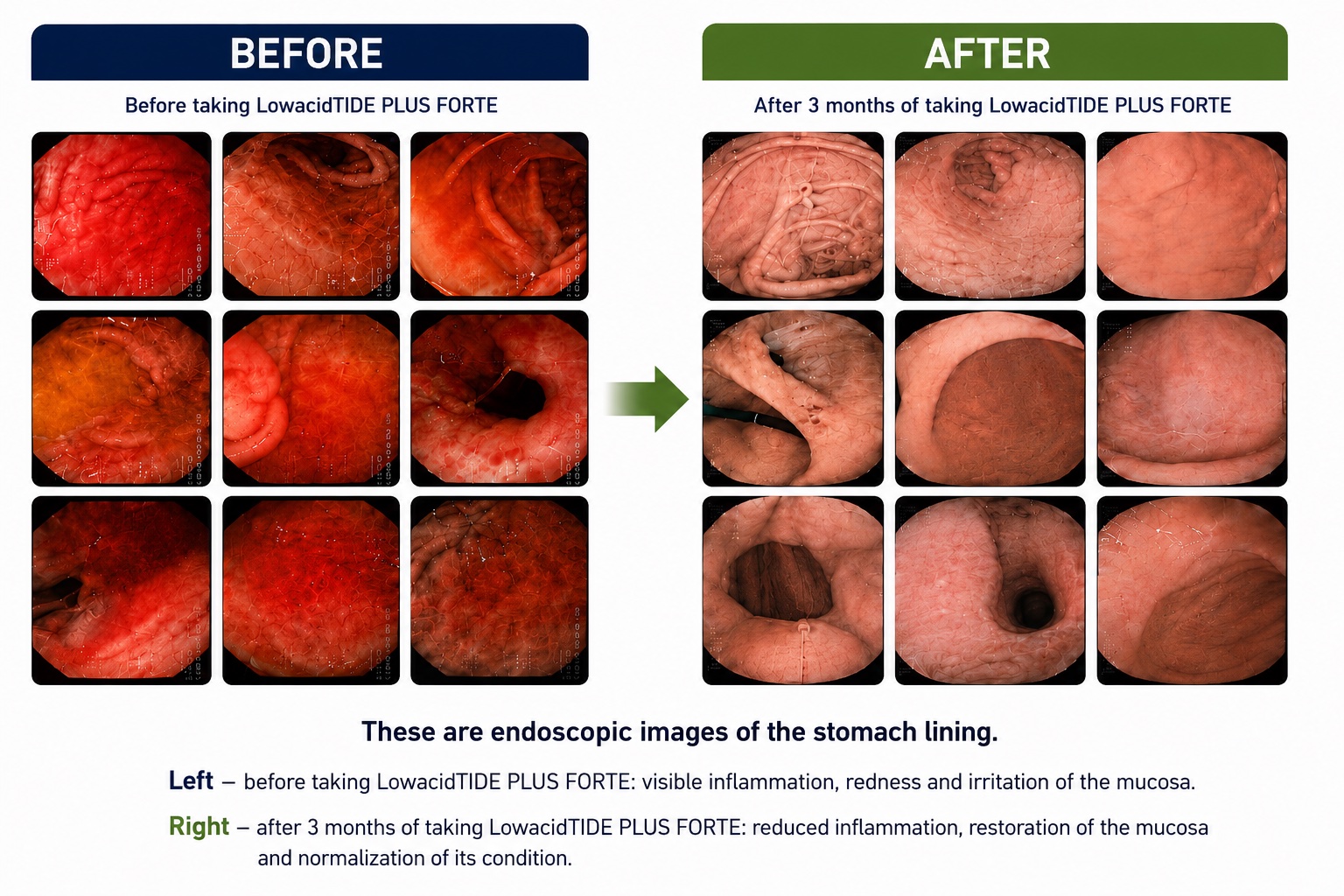
Due to this positive clinical progress, the gastroenterologist changed the recommended monitoring schedule: instead of examinations every six months, the patient was advised to undergo gastroscopy once every two years.
The results presented are individual and do not guarantee the same effect in other patients.
|
|
Expert commentary by Svetlana Malevich: «Atrophic gastritis is a chronic condition, and therefore even when there is significant improvement in the condition of the gastric mucosa, treatment does not end. Patients need to continue supportive therapy and undergo regular follow-up with a gastroenterologist. It is consistency and a comprehensive approach that make it possible to achieve stable results.» |
Restoration of the Gastric Mucosa After Helicobacter Pylori Infection
According to modern medical understanding, one of the most common causes of chronic gastritis is the bacterium Helicobacter pylori. Long-term persistence of this infection maintains inflammation of the gastric mucosa and may contribute to the development of atrophic changes.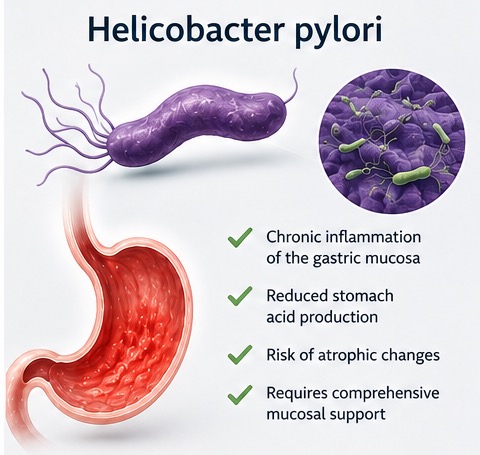
Reduced stomach acid production and weakened protective properties of the gastric lining create more favourable conditions for the persistence of this bacterium. In many cases, atrophic gastritis is associated with Helicobacter pylori infection. After completion of therapy prescribed by a gastroenterologist, it is important to focus on supporting restoration of the gastric mucosa and maintaining normal secretory function.
At this stage, a metabolic correction programme may include nutritional strategies, micronutrients and peptide bioregulators.
|
|
Expert commentary by Svetlana Malevich: «In my experience, patients with significant gastric mucosal atrophy and reduced stomach acid production very often test positive for Helicobacter pylori. After completion of the primary treatment, it is equally important to support restoration of the gastric mucosa, replenish identified deficiencies and create conditions for normal cellular function. In my practice, I use a comprehensive approach, which may include:
The programme is always selected individually, taking into account the patient’s condition and diagnostic results.» |
Gastroesophageal Reflux: Is the Cause Always Excessive Stomach Acid?
Heartburn and the backflow of stomach contents into the oesophagus are most often associated with increased stomach acid production. However, similar symptoms can also occur when stomach acid levels are low. When hydrochloric acid is insufficient, protein foods are digested much more slowly. They remain in the stomach for longer, increasing the volume of stomach contents and raising the likelihood of reflux into the oesophagus. Therefore, experiencing heartburn does not always mean that stomach acid levels are too high.
Long-term gastroesophageal reflux requires medical supervision by a gastroenterologist, as continuous irritation of the oesophageal lining may contribute to the development of Barrett’s oesophagus, a condition associated with precancerous changes that requires regular monitoring.
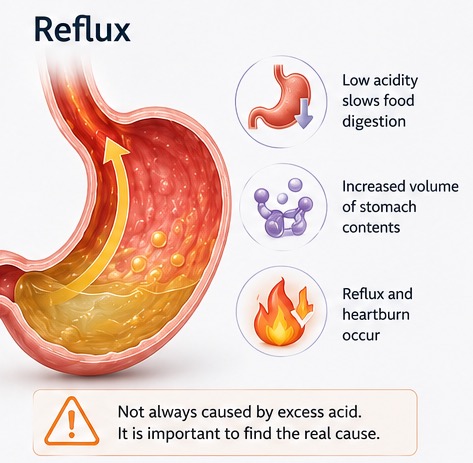
In addition, delayed digestion of food may affect gallbladder function. When the coordination of digestive processes is disrupted, bile flow may become impaired, contributing to bile stagnation and requiring further medical evaluation.
Patients with heartburn are often prescribed medications from the group of proton pump inhibitors (PPIs). However, if symptoms are caused by already reduced gastric secretory function, further suppression of hydrochloric acid production may worsen digestive problems and reduce the absorption of iron, vitamin B12 and other important nutrients.
|
|
Expert commentary by Svetlana Malevich: «When patients complain of heartburn, I recommend not assuming that increased stomach acid is the cause. Before starting long-term therapy, it is important to understand the underlying reason for the symptoms and assess the condition of the gastric mucosa. Only after this evaluation can an effective treatment strategy be selected.»
|
Why It is Not Enough to Focus Only on Eliminating Symptoms
Many patients begin treatment only after the consequences of reduced stomach acid have already appeared: anaemia, vitamin deficiencies, chronic fatigue or digestive problems.
However, correcting deficiencies without restoring normal stomach function does not always lead to a lasting result. The health of the stomach largely determines how effectively nutrients are absorbed and influences the condition of the entire body.
Timely diagnostics, a comprehensive assessment of overall health and an individually tailored recovery programme can help not only replenish existing deficiencies, but also create the conditions necessary for normal stomach function and proper absorption of vital nutrients.
Healthy stomach function is the foundation of normal metabolism. Treatment should focus on addressing the cause, not only the consequences.
REAL WAY", 584 Charles-Quint avenue, Brussels, 1082, Belgium
Real Way" LLC, Company code 300639047, Konstitucijos pr.15-23, Vilnius

UAB "Real Way" © Copyright 2021.
Our site uses cookies
Our website uses cookies and similar technologies to provide you with the best user experience by providing personalized information, remembering marketing and product preferences, and helping you get the right information.
By using this site, you agree to the use of cookies in accordance with this notice in relation to this type of files.
If you do not agree to our use of this type of file, then you must set your browser settings accordingly or do not use the site www.myrealway.com